
Improving Equitable Access to Climate-Related Information in KenyaClimate Resilience and Mitigation
With support from IKI Small Grants, Sauti expanded access to localized climate and agricultural information for women smallholder farmers in Kenya, combining basic-phone digital channels, practical training and evidence-based adaptation support.
Women smallholder farmers face immediate decisions about when to plant, which crops and inputs to use, how to prepare for rainfall changes and where to sell their produce. Reliable information can improve these decisions, but the channels that deliver forecasts and technical guidance are not equally accessible to everyone.
From March 2023 to May 2025, Sauti East Africa implemented a climate information initiative in Busia, Vihiga, Homa Bay and Uasin Gishu counties. Supported by the International Climate Initiative (IKI) Small Grants Programme, the project aimed to put practical, locally relevant climate advice within reach of women who relied on basic mobile phones as well as those able to access WhatsApp.
The Challenge
Droughts, unpredictable seasonal rainfall, flooding and other climate risks make agricultural planning increasingly difficult. Climate forecasts and adaptation advice are available from technical sources, but may be presented in complex formats or online environments that are poorly suited to the needs of time-constrained rural farmers.
Women smallholders can experience additional barriers to information access arising from limited smartphone ownership, the costs of data, digital literacy, care responsibilities and weaker access to extension services. Weather information is also only useful when it is translated into decisions about crop production, water management, soil practices, marketing and risk preparedness.
The project therefore sought to connect climate data to farmer-ready guidance through simple digital services, supported by trust-building outreach and training. Its monitoring framework examined whether women actually accessed the information and incorporated adaptation practices, rather than counting technology deployment alone as success.
The Project
Sauti designed, deployed and improved a low-bandwidth climate and agricultural information service using USSD, SMS and WhatsApp. The platform provided accessible forecasts and localized climate-related content alongside agricultural practices and market information relevant to women farmers in the four counties.
Implementation brought together:
- Needs assessment: consultation with 225 respondents to understand information gaps and preferred communication channels;
- Mobile information delivery: simplified climate and climate-smart agriculture content accessible without relying exclusively on mobile internet;
- Capacity development: direct training of women farmers and community outreach reinforced by radio and other sensitization activities;
- Farmer feedback: adjustments to information formats and platform content based on practical use; and
- Evaluation: baseline and endline fieldwork examining information use, adaptation, preparedness and related livelihood conditions.
The baseline study involved 400 respondents and the endline 349 respondents. Rather than treating digital access as an end in itself, the project evaluated how information and capacity building related to decisions farmers were making in their fields and businesses.
The project also supported peer-to-peer learning and shared analytical findings with implementation partners, using experience from farmers and community organizations to inform approaches that could be sustained and adapted.
Results
Final results (May 2025)
- 16,596 women farmers accessed simplified climate-smart agricultural information, exceeding the target of 15,000.
- 34,210 farmers overall accessed the information services across the project’s outreach and digital channels.
- 567 women farmers received direct training, surpassing the intended training threshold.
- 57.8% of surveyed women users reported adopting climate change adaptation practices, exceeding the 45% outcome target.
- The evaluation reported an increase in the average number of climate adaptation strategies used, from 1.35 at baseline to 2.59 at endline.
- Reported preparedness actions increased from an average of 2.05 to 2.94 per respondent.
The project’s evaluation also documented increased use of accessible digital communication channels: reported USSD use rose from 23% to 69.3% and SMS use from 6% to 73.4% between the baseline and endline samples.
The results show that combining accessible mobile delivery with training and trusted local outreach can support women farmers in applying more climate information to practical agricultural decisions.
Similar Projects by Sauti

SokoGrid transforms fragmented agricultural market data into actionable intelligence through automated data validation, machine learning and predictive analytics. Covering more than 300 commodities and 200 markets, the platform supports evidence-based decisions on pricing, sourcing and market risks across East Africa.

Sahan Mobile simplifies the deployment of USSD and SMS services across Somalia by providing organizations with one integration and one point of contact. Connecting Hormuud, Telesom and Somtel, the service enables coordinated delivery of mobile information services across multiple networks.
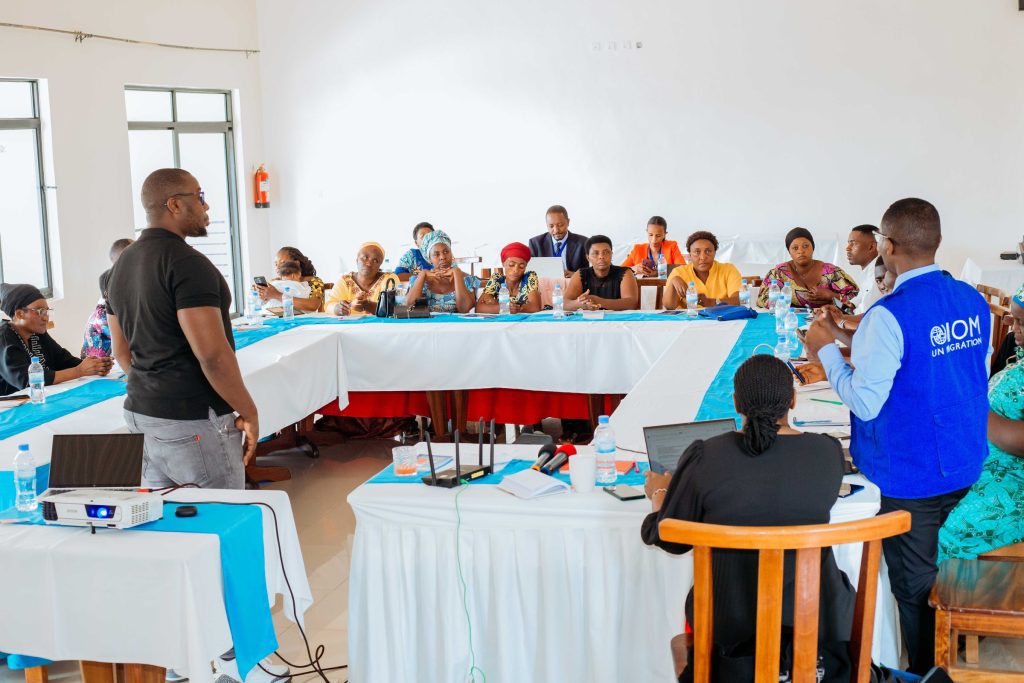
Sauti developed integrated USSD, WhatsApp and touchscreen information services for IOM Rwanda, expanding access to market intelligence, trade procedures, financial guidance and social services. The multilingual platforms are designed to support women, youth and other underserved cross-border traders.
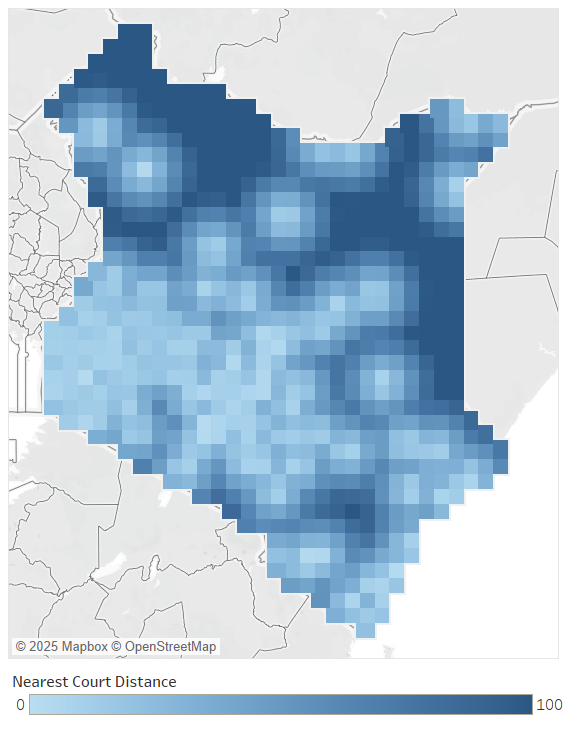
Sauti researchers applied geospatial analysis and population data to examine the distance between Kenyan communities and court infrastructure. Published in the Journal of African Law, the research provides evidence to support more equitable access to justice and targeted legal-service delivery.